
We’re a small team with big ideas and a passion for precision and client-focused results.

Michael J. Williams, PhD
Founder & DirectorFormer National Science Foundation research fellow and former Senior Advisor to the U.S. Department of Homeland Security, his background includes training led by the American Evaluation Association on sustainability evaluation, evaluating coalitions, systems evaluation, and developmental evaluation.
He has consulted with White House staff, the U.S. State Department, the United Nations Development Programme, Public Safety Canada, the UK’s Home Office, the Australian Attorney-General’s Department, and New Zealand’s Department of the Prime Minister and Cabinet, regarding the design or evaluation of local or national emergency prevention frameworks.
His evaluation work has spanned five continents, 18 countries (61 cities), and over 150,000 research participants.

Tim Hulse, M.A.
As both evaluator and researcher, his work focuses on understanding and improving the implementation and outcomes of public safety, development, peacebuilding, and prevention programs.
His evaluation work has encompassed governance, capacity building, education, civil society, and network-based initiatives, utilizing qualitative and quantitative methods.
He has led and supported evaluations for Google, World Vision International, Thomson Reuters Foundation, London’s Mayor’s Office for Policing and Crime, New Zealand’s Department of Prime Minister and Cabinet, and the U.S. State Department. He has also designed and delivered monitoring and evaluation trainings for government and civil society organizations.
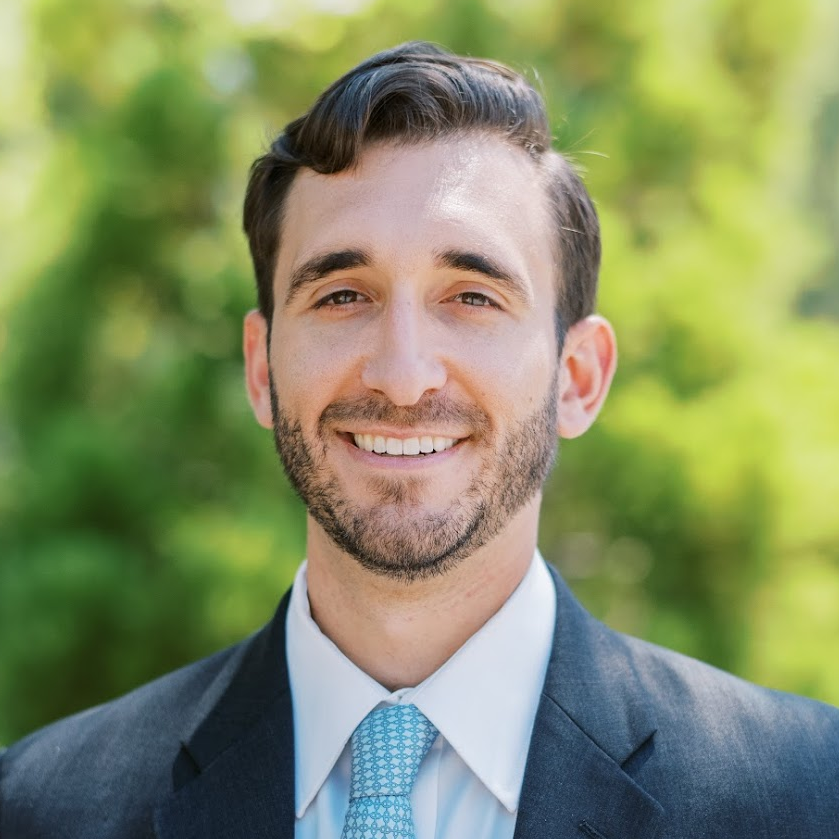
Daniel W. Snook, PhD
Holds a PhD in Community Psychology whose research and evaluation work focuses on risk perception, belief systems, decision-making, prevention, and community-level program outcomes.
He has conducted evaluation and applied research in areas ranging from public health, education, domestic violence prevention, homelessness intervention, and other prevention-focused programming, with specialized training from the American Evaluation Association and work with the Centers for Disease Control and Prevention.
His methodological expertise includes qualitative analysis, survey research, mediation analysis, longitudinal mediation, structural equation modeling, scale validation, and other advanced quantitative methods.

Alem Hamzić, M.A.
Holds a Master’s degree in International Relations and Diplomacy from the University of Sarajevo, where his research examined exchange programs as an instrument of U.S. soft power in Bosnia and Herzegovina.
An alumnus of the U.S. State Department’s Youth Leadership Program and the Visitors Programme of the Federal Republic of Germany, his work has focused on leadership, civic engagement, inter-group cooperation, public diplomacy, and program coordination.
He has served as evaluation coordinator for the U.S. Embassy in Bosnia and Herzegovina, and has worked with organizations across public, private, and NGO sectors including the Centre for Humanitarian Dialogue, Harvard University, and the Delegation of the European Union to Bosnia and Herzegovina.
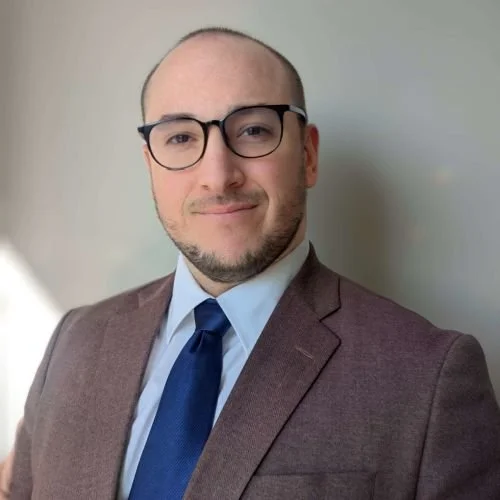
Michael H. Becker, PhD
Dr. Becker’s research focuses on prevention programming, including criminological theory, and the individual and group-level correlates of support for political violence.
His work includes process and outcome measurement, experimental design, inferential statistics, survey methods, and applied evaluation for prevention-focused programs.
He has contributed to research and evaluation projects with American University, the University of Nebraska’s National Counterterrorism Innovation, Technology, and Education Center, the University of Maryland’s National Consortium for the Study of Terrorism and Responses to Terrorism, and the United Nations Interregional Crime and Justice Research Institute.